
The Hospitality Show Miami 2026 Puts Design and AI on the Same Stage
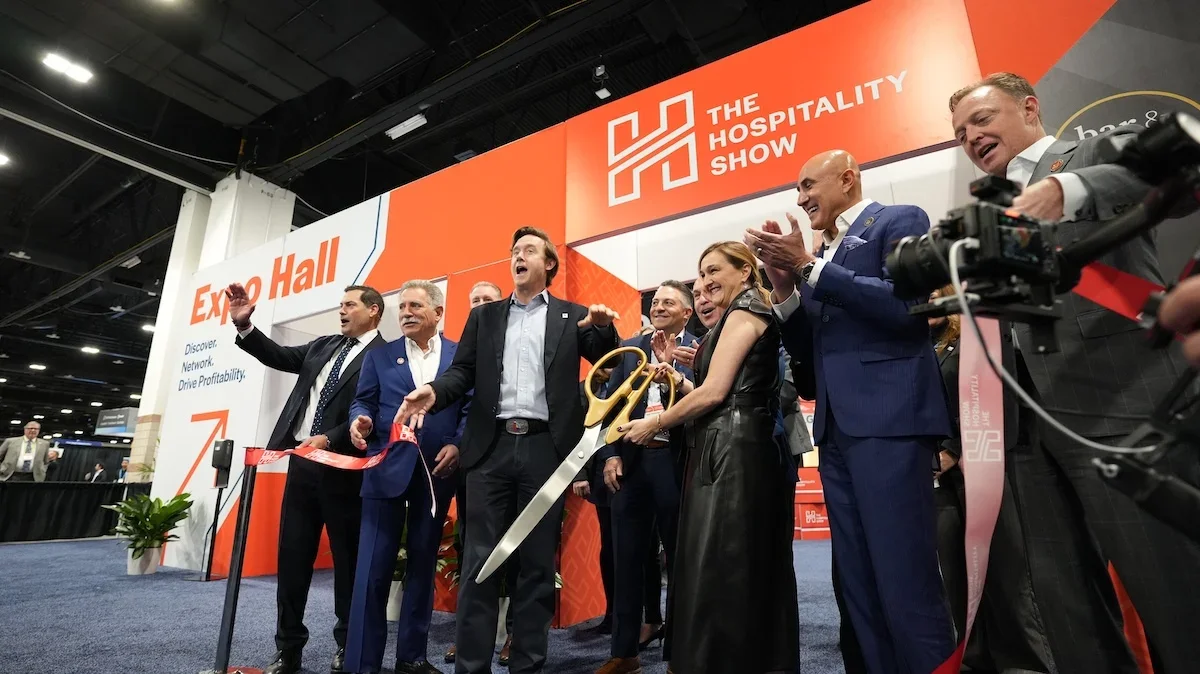
Registration is open for The Hospitality Show Miami 2026, running November 2–4 at the Miami Beach Convention Center. It's produced by Questex and the American Hotel & Lodging Association, and it's built around the business of operating hotels: not the romance of hospitality, the mechanics of it.
The agenda is what's worth reading. There are six expo pavilions this year, and two of them are design and technology, sitting next to food & beverage, commercial, operations, and hospitality services. On the Visionary Stage, Hilton CEO Chris Nassetta will discuss industry change with Davidson Hospitality's Thom Geshay, and Duncan Wardle, the former head of Innovation and Creativity at Disney, Pixar, Lucasfilm, and Marvel, will talk storytelling to a room full of hotel operators.
That isn't a coincidence of scheduling. It shows where the industry now believes the real decisions get made: at the point where design, technology, and the guest story meet.
Design stopped being a line item
For years, design sat outside the strategy conversation. It lived under capital expenditure, got reviewed every five to seven years, and rarely appeared in the same meeting as revenue management or marketing.
A dedicated design pavilion, on equal footing with commercial and operations, changes that. The people running hotel P&Ls are expected to walk that floor the same way they walk the technology floor. It tracks with what guests already do: nobody separates the room from the brand anymore. A property's design is the first argument it makes for its price, before a single staff interaction.
AI moved from the back office to the guest
The agenda calls out best practices in implementing AI-powered technology as a session topic, placed next to guest expectations and experiential demand. A few years ago, AI in hospitality mostly meant revenue management software nobody outside finance saw.
Guests now interact with it directly: a booking flow that remembers a dietary preference, a digital concierge that gets a request right, a loyalty offer that fits instead of a generic upsell. The difference between "the app remembered me" and "the app is tracking me" is almost entirely a design decision, not a technical one.
Storytelling as an operating skill
Wardle spent his career in places where the story is the product. Putting him on the main stage of an operations conference says operators are now expected to think the same way: not "what amenities do we offer," but "what story does a guest walk into, and does every touchpoint stay in character."
That's a higher bar than a nice lobby. The brand decision, the interior design decision, and the guest experience decision all have to answer to the same story, or it breaks the first time a guest notices a mismatch.
What The Hospitality Show Miami 2026 means for Miami's F&B industry
• Hotel restaurants are part of the core agenda. Miami has a strong hotel-restaurant scene, and a food & beverage pavilion at the same level as design and technology confirms that F&B is a revenue and brand driver, not an amenity.
• Decision-makers will be in town. For three days, hotel owners, operators, and developers are in Miami Beach, many of them planning renovations and new F&B concepts for 2027.
• AI becomes a guest-facing design problem for restaurants too. Reservations, personalized recommendations, and loyalty now shape how a restaurant feels, not just how it operates.
• A consistent story wins. In a city where guests compare restaurants inside hotels with standalone concepts, the brands that keep one story from the door to the check will stand out.
The Jastor read
This is the intersection Jastor works in, and the industry just put it on a stage. Branding, interior design, and AI-driven growth used to be three line items, three budgets, and three vendors who never talked to each other. The show's own agenda argues that model is outdated.
For an operator planning a renovation, a new concept, or a technology rollout, the practical takeaway isn't "attend more conferences." It's this: stop briefing your designer, your brand team, and your tech vendor separately. Brief them once, with the same story, or pay for the disconnect later in reviews that say the place "looks nice but feels off." The same principle drives restaurant design trends in 2026.
What to do with this
If you're planning capital work on a property or concept in the next twelve months, treat design and technology as one conversation from the first meeting. That's the difference between a renovation that reads as a renovation and one that reads as a repositioning.
Jastor does this for hotel and restaurant groups in Miami and beyond: branding, interior design, and AI-driven growth run by one team, so an operator gets a single story instead of three invoices. See how it comes together in our work, or talk to us about your next renovation or concept.
Sources
· Hotel Management, 'The Hospitality Show opens registration for 2026 show in Miami' (June 3, 2026) — https://www.hotelmanagement.net/hospitality-show/hospitality-show-opens-registration-2026-show-miami
· AHLA, official announcement — https://www.ahla.com/news/hospitality-show-opens-registration-industry-event-focused-hotel-operations-and-performance
· Miami Beach Convention Center, event listing — https://www.miamibeachconvention.com/events/hospitality-show-2026